Guide 2 | Ergonix Workplace Guidance Series
About the Ergonix Workplace Guidance Series
The Ergonix Workplace Guidance Series is a collection of free, evidence-based resources designed to help organisations improve workplace ergonomics, reduce musculoskeletal discomfort and support employee wellbeing. Each guide offers practical advice that organisations can share with employees as part of DSE awareness, workplace wellbeing and health and safety initiatives.
Why Movement Matters
Prolonged and sustained DSE (Display Screen Equipment) use, combined with reduced physical movement during the working day, can increase the risk of musculoskeletal discomfort, particularly in the neck, shoulders and lower back.
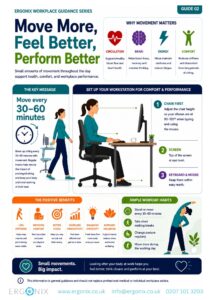
A simple principle used in workplace ergonomics is:
Move More, Feel Better, Perform Better
Regular movement throughout the working day plays an important role in supporting employee wellbeing and reducing musculoskeletal strain in desk-based work.
Workplace movement and musculoskeletal comfort
The human body is designed for regular movement throughout the working day. When sitting is prolonged, the spine and surrounding muscles remain under sustained load, particularly during screen-based work, which can contribute to stiffness and discomfort over time.
In office-based and hybrid working environments, small changes in daily behaviour can help reduce this load and support more comfortable working patterns.
Simple workday habits include:
- Taking regular short breaks away from the desk
- Taking lunch away from the workstation
- Using stairs instead of lifts where possible
- Moving during meetings when appropriate
- Incorporating light stretching during the day
These habits help reduce long periods of sitting and support more balanced movement throughout the working day. Regular movement should complement good workstation setup, not replace it. Both play an important role in reducing musculoskeletal strain and supporting comfortable, productive work.
Workplace performance and wellbeing
Physical comfort has a direct influence on performance. When musculoskeletal discomfort is reduced, people are better able to concentrate and maintain productivity throughout the working day.
Regular movement can support:
• Improved focus and attention
• Reduced fatigue and stress
• Enhanced problem-solving and creativity
• More consistent task performance
• Better overall wellbeing
Free Workplace Guidance
Download Guide 2 – Move More, Feel Better, Perform Better (PDF)
Print and share within your organisation.
It is commonly used to:
- Support DSE awareness and training
- Share within employee wellbeing communications
- Encourage healthier movement habits in desk-based roles
- Support HR, Health and Safety, and Occupational Health programmes
Workplace ergonomics and DSE training UK
Ergonix provides workplace ergonomics and DSE training across the UK, supporting organisations to reduce musculoskeletal risk and improve employee wellbeing.
Services include:
- DSE assessor training courses
- DSE workstation assessments
- Workplace ergonomics and musculoskeletal wellbeing workshops
- Practical strategies to reduce workplace musculoskeletal risk
These services support HR, Health and Safety, and Occupational Health teams in improving workplace wellbeing and reducing work-related discomfort.
In Summary
Small changes in daily movement behaviour can make a meaningful difference to comfort, wellbeing, and performance in office-based and hybrid working environments.
Explore More Free Workplace Guidance
The Ergonix Workplace Guidance Series is a growing collection of free, evidence-based resources designed to help organisations improve workplace ergonomics, reduce musculoskeletal risk and promote healthier working habits.
Upcoming guides include:
- Guide 1 – Working Comfortably, Protect Your Spine
- Guide 3 – Using a Laptop Comfortably
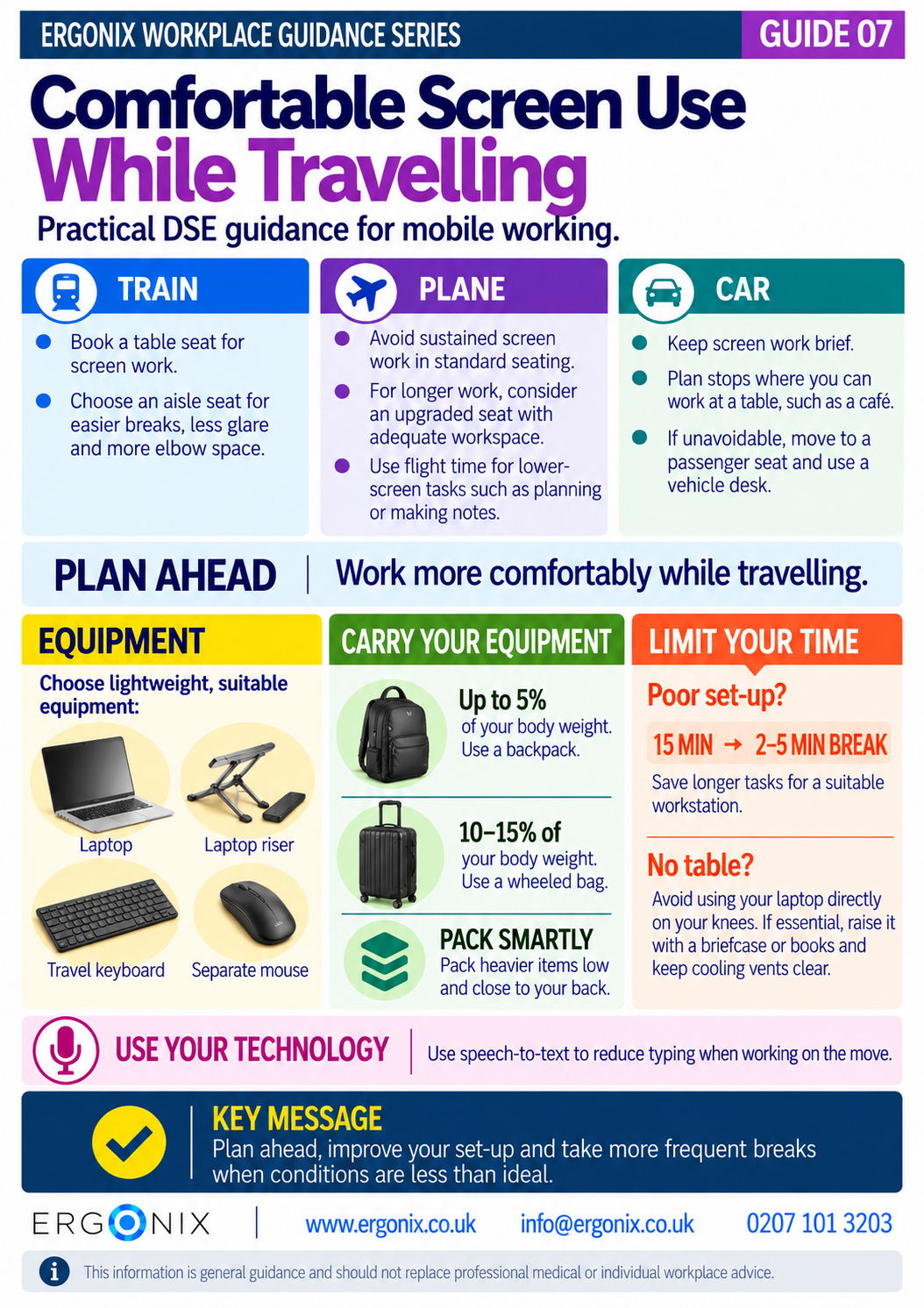
- Guide 8 – Working While Travelling