Many people believe a Display Screen Equipment (DSE) assessment is simply about adjusting a chair or positioning a computer monitor. While these are important elements, an effective DSE assessment takes a much broader view of workplace ergonomics and risk.
Work-related musculoskeletal disorders and discomfort rarely arise from a single cause. Instead, they might develop through a combination of factors including work tasks, workstation set-up, environmental conditions, physical factors and psychological wellbeing. These elements interact with one another, which is why a holistic approach is essential to understand what is contributing to risk, how this may lead to discomfort and to help prevent issues from developing.
This approach moves DSE assessments away from a narrow focus on equipment and towards a more complete understanding of how work is actually performed. It also aligns with current ergonomic and occupational health practice and guidance.
Why this matters (for organisations)
Poor or inconsistent DSE assessments can contribute to avoidable issues such as increased musculoskeletal discomfort, reduced productivity, and higher levels of sickness absence or occupational health referrals. In many cases, these issues develop gradually and are not identified until they begin to impact performance or wellbeing.
Taking a proactive approach and viewing DSE assessments as a whole helps organisations reduce these risks early and supports healthier, more sustainable ways of working. Considering workstation set-up, environmental conditions, individual factors, and physical and psychological wellbeing together enables organisations to identify meaningful, rather than superficial, adjustments that support both employee wellbeing and business performance.
A practical framework for understanding DSE risk
The infographic below shows the key elements of a DSE assessment and how they interact to influence health, comfort and performance at work.
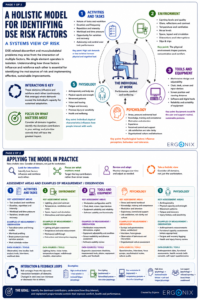
Download the DSE Risk Framework Infographic here.
What this means in practice
DSE assessments are not simply about complying with HSE DSE legislation; they are an opportunity to improve comfort, reduce risk, and support performance across office-based, remote and hybrid working environments.
This helps ensure workstation recommendations are consistent, evidence-based and tailored to the individual, rather than focused solely on equipment.
Supporting better practice (and reducing risk in your organisation)
For organisations looking to strengthen their approach further, DSE assessor training courses and DSE assessments provide practical support to improve consistency, compliance and alignment with ergonomic best practice.
This is particularly important where organisations want to:
- Reduce musculoskeletal-related absence
- Improve consistency of DSE assessments across teams
- Support office, hybrid and remote workers effectively
- Move from reactive fixes to proactive prevention
Next step
If you want to improve how DSE is managed in your organisation, the most effective starting point is ensuring workstation assessments are carried out consistently and consider all contributing factors, not just equipment.
Explore DSE assessor training courses and workplace DSE support options to strengthen your internal capability.