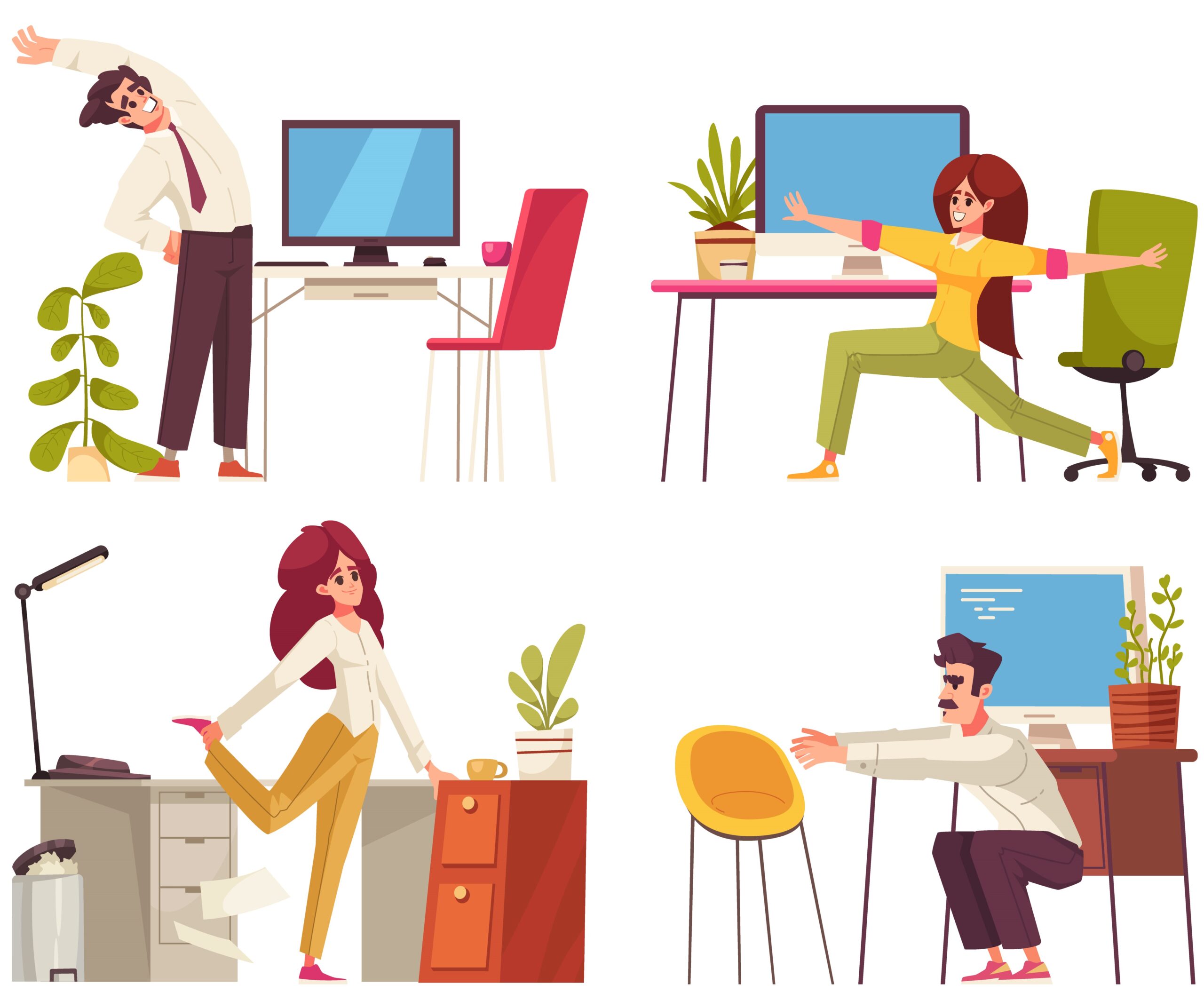
 Display Screen Equipment (DSE) risk assessments are a legal requirement for UK employers. However, many organisations still struggle to translate this requirement into meaningful day-to-day practice, particularly in hybrid and remote working environments.
In some workplaces, assessments are completed but rarely revisited. In others, responsibility falls informally to line managers without specialist training. Many employees receive little practical guidance on how to set up or manage their workstation safely.
As a result, prolonged discomfort, fatigue and reduced productivity remain common among screen-based staff.
The underlying issue is not just legal compliance; employees also need the skills and understanding to manage their own comfort and wellbeing.
DSE risk management only becomes effective when employees understand how their working habits, posture, and environment interact, how to make practical adjustments themselves, and when to recognise early symptoms of discomfort and report them to the appropriate person. This is why structured DSE training is often the missing link between regulatory compliance and genuine workplace wellbeing.
DSE Compliance in the UK: Where Many Organisations Struggle
Under the Health and Safety (Display Screen Equipment) Regulations, employers must:
- Assess DSE risks
- Reduce those risks where reasonably practicable
- Provide information and training to users
While the assessment requirement is widely discussed, the training element is often underdeveloped.
Without practical education, employees may:
- Complete DSE assessments without understanding the questions
- Leave chairs and monitors in default positions
- Work prolonged hours without movement breaks
- Normalise early musculoskeletal discomfort
What is the result? Without practical guidance, staff are often unsure how to adjust their workstations safely, which can lead to musculoskeletal discomfort, fatigue, reduced concentration, and lower productivity.
Effective DSE training bridges that gap.
How DSE Training Builds Practical Ergonomic Confidence
Screen-based work rarely causes immediate injury. Musculoskeletal issues typically develop gradually through sustained static posture, low movement variability, and poorly adjusted workstations.
When employees understand:
- Neutral working posture
- DSE equipment positioning principles
- How chair adjustments and breaks affect spinal loading
- The role of microbreaks and task variation
- Environmental factors
- Safe use of additional devices (laptop, tablet, phone)
- Ownership of workstation adjustments
- Safe practices for home or hybrid working
- Early symptom recognition and reporting
They are better able to manage their own comfort, make practical adjustments, and prevent discomfort before it escalates.
Evidence for Participatory Approaches
Participatory approaches, where employees are actively involved in identifying risks and adjusting their own workstations, lead to more sustained behaviour change and improved wellbeing. The World Health Organization’s Healthy Workplace Framework and Model (2010) highlights participatory ergonomics programmes as effective interventions for workplace musculoskeletal health.
Leadership and Organisational Support
Research shows that leadership and organisational support play a crucial role in successful outcomes. In a longitudinal study of employees working from home, factors such as manager support, trust, and role clarity were associated with lower work-related stress and reduced musculoskeletal discomfort, while high job demands increased the risk of pain (Oakman et al., 2023). This demonstrates that ergonomic interventions are most effective when combined with proactive leadership and a supportive work environment.
Employees with the combination of training and organisational support are far more likely to make proactive adjustments before discomfort escalates. This reduces unnecessary escalation to managers, HR, or occupational health while ensuring genuine concerns are identified early.
Bringing It Together: DSE Assessor vs Employee DSE Training
For organisations seeking to build internal capability, DSE Assessor Training equips nominated staff to deliver first-line workstation assessments confidently and consistently. Meanwhile, Employee DSE Training transforms DSE from a one-off administrative task into an ongoing risk management process, empowering employees to manage their own comfort and prevent issues before they escalate.
The Link Between Musculoskeletal Health and Workplace Wellbeing
DSE risk management is often framed purely as a physical health issue. In reality, prolonged discomfort also affects:
- Concentration
- Productivity
- Fatigue levels
- Mood
- Engagement
Persistent neck, shoulder or lower back pain can contribute to presenteeism and reduced work quality long before formal sickness absence occurs.
This is why workplace wellbeing initiatives should not separate musculoskeletal health from overall employee wellbeing.
Holistic workplace wellbeing workshops that address posture, movement, stress load and sustainable work habits support both physical and psychological health outcomes.
Prevention Works Best at Three Levels
High-performing organisations approach DSE and wellbeing through layered prevention:
Primary prevention: Focuses on the working environment and organisation, removing or reducing hazards before issues arise. For DSE, this includes proactive risk assessments, educating staff, raising awareness, and providing guidance on workstation set-up.
Secondary prevention: Focuses on the individual, identifying early symptoms and offering timely support to prevent discomfort or fatigue from escalating. This can include self-monitoring, follow-up checks, and early adjustments to posture or workstation use.
Tertiary intervention: Targets employees with established discomfort or fatigue, providing restoration and rehabilitation. In DSE contexts, this can also involve targeted workstation assessments and clinical or occupational health support to restore comfort, productivity, and wellbeing.
Too often, businesses focus primarily on tertiary interventions. The most effective approach is to implement all three layers (WHO, 2010; SOM, 2023). Together, they reduce risk, support employee wellbeing, prevent issues from escalating into long-term problems, and minimise the need for reactive interventions (WHO, 2010; SOM, 2023).
Reinforcing Good Practice Beyond the Training Room
Behavioural change does not occur through a single training session.
Simple reinforcement tools such as clear visual guidance, practical reminders and accessible educational materials help embed ergonomic awareness into daily working routines.
Workplace wellbeing infographics can act as visual prompts that reinforce key DSE principles long after formal training has taken place.
These small, consistent reminders support culture change more effectively than policy documents alone.
Building Sustainable DSE Risk Management in UK Workplaces
For HR professionals, Health and Safety leads, and Occupational Health teams, the challenge is not simply meeting minimum DSE regulatory standards. The real goal is creating systems that genuinely reduce risk, improve productivity, and sustain employee wellbeing over the long term.
Effective DSE programmes are built on:
- Educated DSE users
- Competent in-house DSE assessors
- Managers trained to support and reinforce safe working habits
- Practical, behaviour-focused training
- Ongoing reinforcement
DSE training is not an optional add-on but forms the foundation of sustainable workplace ergonomics.
Creating Lasting Workplace Change Through DSE Training and Education
Sustainable workplace ergonomics is achieved when training, assessment, and ongoing reinforcement work together. Educated staff, capable in-house DSE assessors, and supportive managers create a culture where employees can proactively manage their own comfort, reduce fatigue, and maintain productivity.
By combining DSE Assessor Training, employee DSE training delivered through practical wellbeing workshops, and accessible visual guidance such as infographics, organisations can turn compliance into meaningful behaviour change, protecting both physical and mental health in the long term.
Investing in these measures not only meets regulatory requirements but also fosters a healthier, more engaged, and productive workforce. To explore how your organisation can implement practical DSE education and wellbeing initiatives, learn more about our one-day DSE Assessor Course, Employee Wellbeing Workshops, and Workplace Wellbeing Content Resources.
Key Takeaways
-
Compliance alone isn’t enough: Employees need practical guidance and DSE training to manage their own comfort and prevent discomfort.
-
Two types of DSE training matter: DSE Assessor Training equips staff to conduct first-line workstation assessments, while Employee DSE Training empowers individuals to manage their own comfort and prevent issues.
-
Early symptom recognition: Encouraging staff to identify and report discomfort early reduces the need for reactive interventions and protects productivity.
-
Participatory approaches work best: Employees involved in adjusting their own workstations are more likely to adopt long-term healthy habits.
-
Organisational and managerial support is essential: Supportive managers and proactive leadership improve outcomes, reduce stress, and reinforce ergonomic behaviours.
-
Prevention at multiple levels: Combine primary, secondary and tertiary interventions for sustainable health and wellbeing.
-
Reinforcement tools enhance learning: Visual guides, infographics, and reminders help embed ergonomic awareness beyond the training room.
-
Sustainable ergonomics requires integration: Combining training, assessment, and ongoing reinforcement ensures lasting improvements in employee comfort, productivity, and wellbeing.
By Angela Yates | Workplace Health, Wellbeing & Ergonomics Specialist | HCPC-Registered Physiotherapist