Modern workplaces rely heavily on computers, laptops, tablets, and other display screen equipment (DSE). While essential for productivity, using these devices incorrectly or without support can lead to discomfort, strain, reduced performance and sick leave. Identifying common DSE challenges allows organisations to act proactively, safeguard employee wellbeing, and optimise workplace efficiency.
Many employees experience discomfort, fatigue, or difficulty using equipment correctly, while managers face the challenge of supporting staff and maintaining productivity. Understanding the most common DSE challenges enables organisations to implement proactive strategies that protect staff health and enhance overall performance.
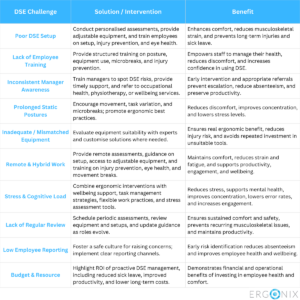
Below are the top 10 challenges organisations face with DSE, alongside practical solutions and the benefits of addressing them:
1. Poor DSE Workstation Setup
Challenge: Employees’ chairs, desks, monitors, and keyboards are not correctly adjusted to their individual needs, which can cause strain, discomfort, and long-term musculoskeletal issues.
Solution / Intervention: Conduct personalised DSE assessments, provide adjustable ergonomic equipment, and train employees on correct workstation setup, injury prevention, and eye health.
Benefit: Enhances comfort, reduces the risk of musculoskeletal strain, and prevents long-term injuries and related sick leave.
2. Lack of Employee Training
Challenge: Staff are unsure how to adjust equipment to support good posture, incorporate breaks effectively, and understand the risks of injury.
Solution / Intervention: Provide structured employee training sessions on posture, equipment use, microbreaks, and injury prevention.
Benefit: Empowers staff to manage their own health and wellbeing, reducing discomfort and increasing confidence in using DSE.
3. Inconsistent Manager Awareness
Challenge: Managers may not recognise early signs of strain, poor posture, lack of breaks, or stress and fatigue, delaying intervention.
Solution / Intervention: Train managers to spot DSE-related risks, provide timely support and adjustments, and refer employees to occupational health, physiotherapy, or wellbeing services when needed.
Benefit: Early intervention and appropriate referrals prevent minor issues from escalating, reducing absenteeism and preserving productivity.
4. Prolonged Static Postures
Challenge: Sitting or standing for long periods without variation increases risk of musculoskeletal problems and mental fatigue.
Solution / Intervention: Encourage regular movement, task variation, and microbreaks; promote ergonomic best practices.
Benefit: Reduces discomfort, improves concentration, and lowers stress levels.
5. Inadequate Equipment or Mismatched Tools
Challenge: Equipment may be unsuitable for employees’ tasks or personal needs, even if it is marketed as ergonomic.
Solution / Intervention: Evaluate equipment suitability with in-house or independent DSE experts; customise solutions where possible.
Benefit: Ensures equipment delivers real ergonomic benefits, reduces injury risk and sick leave, and avoids repeated spending on unsuitable tools and equipment.
6. Remote and Hybrid Work Challenges
Challenge: Employees working from home or in hybrid settings often lack guidance, training, and suitable equipment.
Solution / Intervention: Provide remote DSE workstation assessments, clear guidance on setup, access to adjustable equipment, and training on injury prevention, eye health, and movement breaks.
Benefit: Enhances comfort, reduces strain and fatigue, and maintains productivity, engagement, and wellbeing for remote and hybrid employees.
7. Stress and Cognitive Load
Challenge: Poor workstation setup, workload pressures, and complex systems can increase mental fatigue, anxiety, and burnout. This can lead to decision fatigue, higher error risk, and reduced concentration.
Solution / Intervention: Combine ergonomic interventions with wellbeing support, task management strategies, and flexible work practices. Implement stress assessment tools.
Benefit: Reduces stress, supports mental health, improves concentration, lowers error rates, and increases overall employee engagement.
8. Lack of Regular Review and Follow-Up
Challenge: DSE setups and employee needs can change over time, but periodic checks are often missed, leaving discomfort or risk unaddressed.
Solution / Intervention: Schedule regular follow-up assessments, review equipment and workstation setups, and update guidance as employee tasks or roles evolve.
Benefit: Ensures sustained comfort and safety, prevents recurring musculoskeletal issues, and maintains productivity and wellbeing.
9. Low Employee Reporting
Challenge: Employees may be reluctant to report discomfort or difficulties, letting issues worsen unnoticed.
Solution / Intervention: Foster a culture where staff feels safe to raise concerns; implement clear reporting channels.
Benefit: Early identification of risks reduces absenteeism and improves employee health and wellbeing.
10. Budget and Resource Constraints
Challenge: Organisations may hesitate to invest in training, DSE assessments, or ergonomic equipment.
Solution / Intervention: Highlight the ROI of proactive DSE management, including reduced sick leave, improved productivity, and lower long-term costs.
Benefit: Demonstrates the financial and operational benefits of investing in employee health and comfort.
Summary
DSE challenges in the workplace are multifaceted, involving physical, cognitive, and organisational factors. A proactive, holistic approach that combines workstation assessments, training, managerial support, and ongoing follow-up ensures that employees remain healthy, engaged, and productive.
By addressing these challenges strategically, organisations can reduce discomfort, prevent injuries, lower absenteeism, and foster a workforce that is healthy, focused, and well-supported. This proactive approach also helps avoid the negative impacts discussed in our next article.
Want to ensure your employees stay healthy and productive? Contact Ergonix today to arrange a DSE assessment, a DSE assessor training course or an employee wellbeing training session.
FAQs – Top DSE Challenges in the Workplace
What are the most common DSE challenges employees face?
Employees often experience discomfort, fatigue, and difficulty using equipment correctly. Common challenges include poor workstation setup, lack of training, prolonged static postures, unsuitable equipment, and limited manager support.
How can organisations prevent DSE-related discomfort and injuries?
By conducting personalised workstation assessments, providing ergonomic equipment, offering employee training, encouraging regular movement and breaks, and maintaining regular follow-ups to adapt setups as needs change.
Why is manager awareness important in managing DSE risks?
Managers play a key role in spotting early signs of strain, poor posture, or fatigue. Timely intervention and support from managers help prevent minor issues from developing into injuries, absenteeism, or productivity loss.
How can remote or hybrid employees stay safe with DSE?
Remote and hybrid workers are subject to the same rules as office-based employees. They must have a DSE assessment of their workstation to identify any risks. Employers should take action to reduce those risks, which may include providing suitable equipment, and offer guidance on posture, breaks, and movement. This helps reduce strain, fatigue, and the risk of musculoskeletal injuries.
What are the benefits of addressing DSE challenges proactively?
Proactive DSE management improves comfort, reduces injuries and absenteeism, enhances productivity, and fosters a healthy, engaged, and well-supported workforce. It also helps organisations avoid the negative consequences of poor DSE practices.
By Angela Yates | Workplace Health, Wellbeing & Ergonomics Specialist | HCPC-Registered Physiotherapist