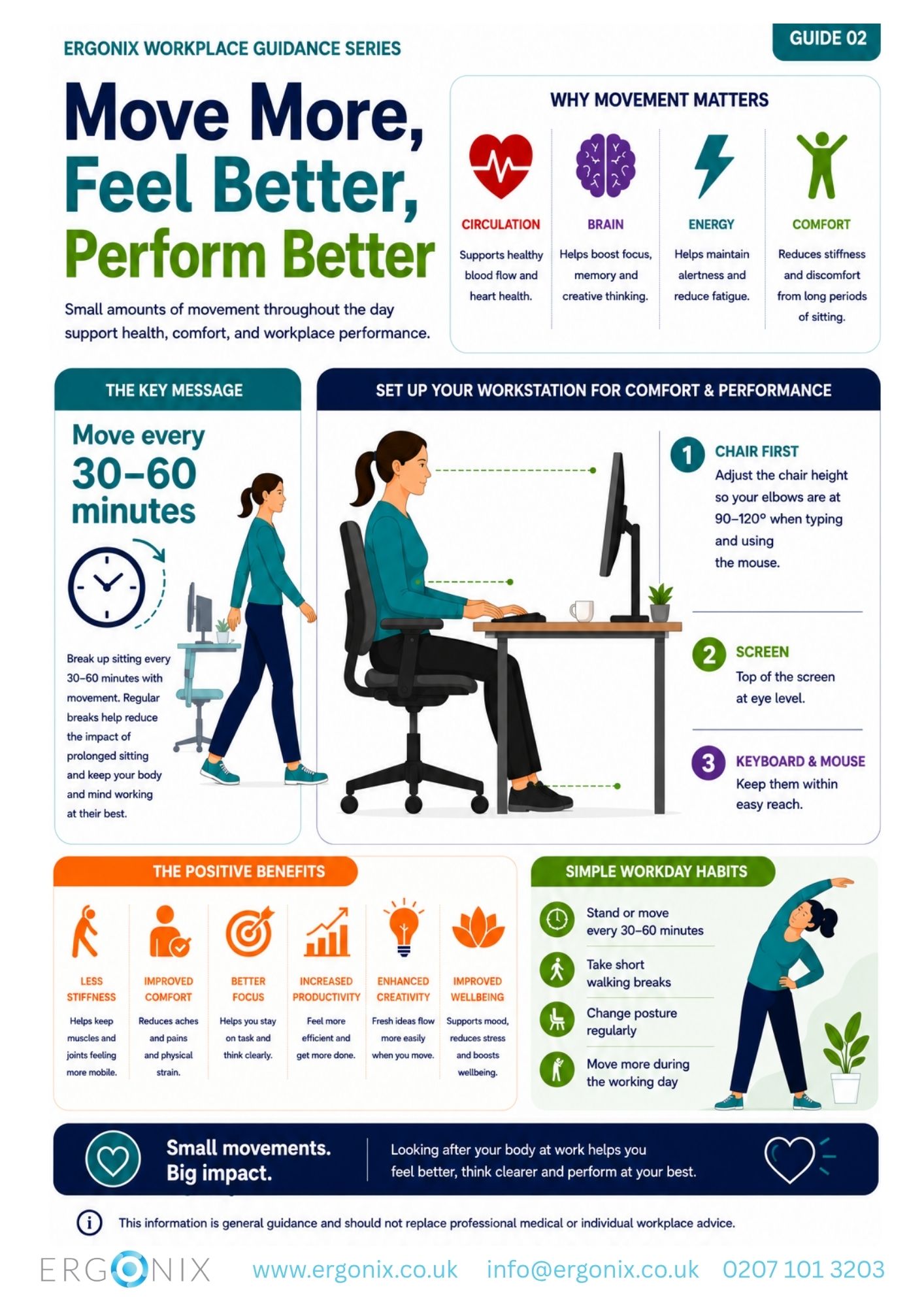
Managing Display Screen Equipment (DSE) effectively is about more than ticking boxes or meeting compliance requirements. Done well, it protects employees’ musculoskeletal (MSK) health, reduces stress, supports wellbeing, and improves productivity. Yet many organisations struggle to make DSE assessments meaningful in practice.
Even when policies exist, recurring discomfort, strain, and stress are common, leading to lost productivity, increased sick leave, and disengaged staff.
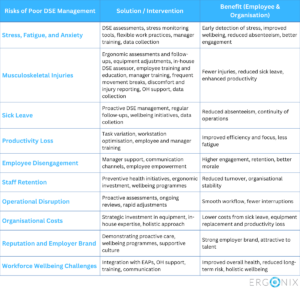
Top 10 Impacts of Poor DSE Management:
These impacts arise when employees use DSE incorrectly or without the support they need. Recognising these challenges is the first step in prevention.
- Stress, Fatigue, and Anxiety
- Musculoskeletal (MSK) Injuries
- Sick Leave
- Productivity Loss
- Employee Disengagement
- Staff Retention
- Operational Disruption
- Organisational Costs
- Reputation and Employer Brand
- Workforce Wellbeing Challenges
Why Reactive Approaches to DSE Cost Organisations?
Many organisations only address DSE workstation issues once problems appear, responding to sick leave, injuries, fatigue, or complaints instead of preventing them. This reactive approach leads to recurring musculoskeletal injuries, higher stress levels, increased absenteeism, lost productivity, and disengaged employees. Treating DSE as a tick-box exercise rather than a proactive tool to safeguard staff health and wellbeing means opportunities to prevent issues before they escalate are often missed.
According to the CIPD 2025 Health and Wellbeing at Work report, the average employee now takes 9.4 days of absence per year, the highest level in over 15 years, with stress and musculoskeletal issues among the leading contributors, highlighting the tangible impact of reactive workplace approaches on both employees and organisations.
Importance of Holistic DSE Assessments
The reality is that effective DSE management is not just about ticking boxes. Effective DSE assessment is holistic, considering the environment, the individual’s tasks and job demands, the equipment they use, their physiology, and psychological factors (both personal and organisational). When done correctly, DSE assessments identify hazards and risks before issues arise, helping to minimise musculoskeletal injuries, recognise early signs of stress or anxiety, and ensure that both physical and mental wellbeing are addressed.
Need for Follow-up and Ongoing Review
Even with a holistic assessment, organisations often overlook the need to review and follow up on individual workstations. Without periodic checks, changes in tasks, equipment, or working conditions may go unnoticed, leaving employees at risk of strain, discomfort, or stress.
Misconceptions About Ergonomic Equipment
Another common misconception is that simply providing ergonomic equipment is enough. Many organisations assume that chairs, keyboards, or monitors alone will prevent discomfort and injury. In reality, without considering how the equipment is used, or whether it suits the individual’s tasks and physiology, these investments can create a false sense of compliance, leaving employees at risk.
This issue frequently arises: organisations invest in expensive equipment assuming it is ergonomic, only to notice an increase in musculoskeletal injuries and sick leave. Often, it is only after HR begins tracking these incidents and reviewing recent changes, such as new equipment, that it becomes clear the equipment was poorly designed or did not suit individual needs.
Investing in an in-house DSE assessor and engaging an independent professional to advise on workstation equipment ensures that organisations make informed decisions from the outset. This approach helps prevent costly mistakes, such as purchasing poorly designed equipment that does not suit employee needs, and reduces the risk of musculoskeletal injuries and sick leave later on.
In-House DSE Assessors
Having an in-house DSE assessor provides organisations with immediate access to expertise, enabling regular and timely assessments across the workforce. This ensures that workstation setups are consistently reviewed, changes in tasks or equipment are monitored, and follow-ups are carried out before issues escalate. In-house assessors can also provide ongoing guidance, support managers and employees, and embed a culture of proactive ergonomic management throughout the organisation.
Training and Awareness
Training empowers employees to take control of their own wellbeing by showing them how to adjust chairs, monitors, keyboards, and other equipment to suit their individual needs, adopt correct posture, and incorporate regular breaks or task variation into their working day.
This training is essential for preventing musculoskeletal injuries, fatigue, and discomfort. While training contributes to compliance with the DSE HSE Regulations, it must be combined with workstation assessments, adjustments, and ongoing monitoring to fully meet legal DSE HSE requirements. Employees who understand the principles behind safe DSE use are better equipped to maintain their physical health and reduce the risk of long-term issues.
Equally important is training for managers and team leaders. Managers play a critical role in recognising early signs of risk, such as employees displaying poor posture, having insufficient breaks, reporting discomfort, or showing signs of stress or fatigue. Training enables managers to provide guidance, escalate concerns, and ensure timely interventions before small issues escalate into presenteeism, lost productivity, long-term health problems and sick leave. Well-trained managers help create a culture where ergonomic and wellbeing considerations are embedded into daily work, and employees feel supported in maintaining both their physical and mental health.
Prolonged Static Postures and Remote Work Challenges
Even when assessments are conducted and workstations are appropriately equipped, employees can still experience strain, discomfort, and fatigue due to prolonged static postures. Sitting or standing for long periods without variation increases the risk of musculoskeletal injuries, reduces concentration, and contributes to mental fatigue.
This issue is compounded in hybrid and remote work settings, where home workstations are often overlooked, and employees may lack guidance or clear routines for breaks and task variation. Organisations that fail to address these day-to-day behaviours may see rising absenteeism, reduced productivity, and increased levels of stress and disengagement, despite investing in equipment and training. Employers have a responsibility to support remote DSE setups by providing guidance and establishing clear routines to help employees work safely and comfortably at home.
The CIPD 2025 report indicates that homeworking and hybrid arrangements can reduce sickness absence and increase productivity when effectively supported, reinforcing the value of proactive guidance and routines for remote work.
Stress, Fatigue, and Anxiety
Workload pressures, poor workstation setup, and insufficient breaks all contribute to mental fatigue, stress, and anxiety. These factors can exacerbate musculoskeletal discomfort, reduce engagement, and increase the likelihood of sick leave. CIPD 2025 data shows that stress contributes significantly to both short- and long-term absence, and around a quarter of employees report that work negatively affects both their mental and physical health. Backache and other musculoskeletal issues affected 51% of employees in the past year (CIPD, 2025).
Holistic DSE assessments that consider both physical and psychological factors allow organisations to identify early warning signs of stress and intervene before issues escalate. Tools such as the Stress Indicator Tool can help organisations start conversations about stress, understand the pressures employees face, and pinpoint areas for improvement. Combining ergonomic improvements with wellbeing initiatives, flexible work practices, and supportive management helps to protect both physical and mental health, reinforcing the need for proactive ergonomic and wellbeing strategies.
Encouraging Reporting and Use of Support Services
Many employees do not report discomfort, fatigue, or stress, either out of fear of being seen as complainers or assuming it is not their responsibility. This can allow small issues to escalate into serious health problems. Organisations can prevent this by fostering a culture where staff feel safe raising concerns, with clear reporting channels and timely responses.
Managers and DSE assessors play a crucial role in encouraging communication, identifying risks, and supporting employees in making adjustments before absenteeism or injury occurs. Promoting support services, such as Employee Assistance Programmes (EAPs), is equally important. Ensuring employees are aware of these services, understand how to access them, and feel confident that using them is encouraged and confidential, maximises their effectiveness and reinforces a culture of proactive wellbeing. Organisations also benefit from monitoring service utilisation and identifying barriers, which may indicate a need for clearer communication or additional guidance.
Proactive Strategies for Sustainable DSE Management
Organisations that wait for problems to arise often face recurring injuries, absenteeism, reduced productivity, and disengaged employees. A proactive approach to DSE management can prevent these outcomes. By combining holistic assessments, in-house DSE expertise, employee and manager training, regular follow-ups, and consideration of workload and remote work practices, organisations can address both the physical and psychological demands of work. Integrating DSE with wider wellbeing strategies, including EAP (covering mental health support and physiotherapy) and occupational health (OH) support, ensures that interventions are effective, proportionate, and sustainable.
Taking a preventative approach not only safeguards employees’ health and wellbeing but also supports business performance. By preventing injuries, discomfort, and stress, employees are more likely to remain engaged and stay with the organisation, while fewer absences and health-related issues help maintain smooth day-to-day operations. Additionally, investing in DSE management and wellbeing initiatives reduces avoidable costs associated with sick leave, equipment replacement, and productivity loss, while reinforcing the organisation’s reputation as an employer that genuinely values employee health and wellbeing.
The Role of Leadership
Managers and leaders play a critical role in creating a culture where ergonomic and wellbeing considerations are embedded into daily work. They can actively promote awareness of support services, normalise their use, and link early signs of strain or stress identified during DSE assessments to appropriate interventions. Leadership involvement helps prevent small issues from escalating into absenteeism, injuries, or long-term disengagement.
Conclusion
By shifting from a reactive to a proactive approach, organisations can tackle negative DSE impacts, from stress, fatigue, and musculoskeletal injuries to absenteeism, disengagement and operational disruption. Holistic DSE assessments, regular follow-ups, in-house expertise, training for employees and managers, and integration with wellbeing initiatives such as EAPs and OH support help prevent injuries, reduce stress, maintain productivity, and improve staff retention. Taking these steps not only safeguards employees’ physical and mental health but also minimises organisational costs, enhances engagement, and strengthens the employer’s reputation. DSE should not be seen as a compliance exercise alone; when managed proactively, it becomes a strategic tool for building a healthier, more effective and high-performing workforce.
Want to protect your employees’ health and productivity? Contact Ergonix today to arrange a DSE assessment, in-house DSE assessor training, or employee wellbeing session.
FAQs – Top Negative Impacts of Poor DSE Management
What are the common negative impacts of poor DSE management in the workplace?
Stress, fatigue, musculoskeletal discomfort, disengagement, reduced productivity and sick leave are common negative impacts.
How can employers prevent MSK injuries from workstation use?
Through ergonomic DSE assessments, equipment adjustments, training, task variation, regular breaks and proactive follow-ups.
Why is proactive DSE management important?
It prevents injuries, reduces absenteeism, supports employee health and wellbeing and improves productivity and engagement.