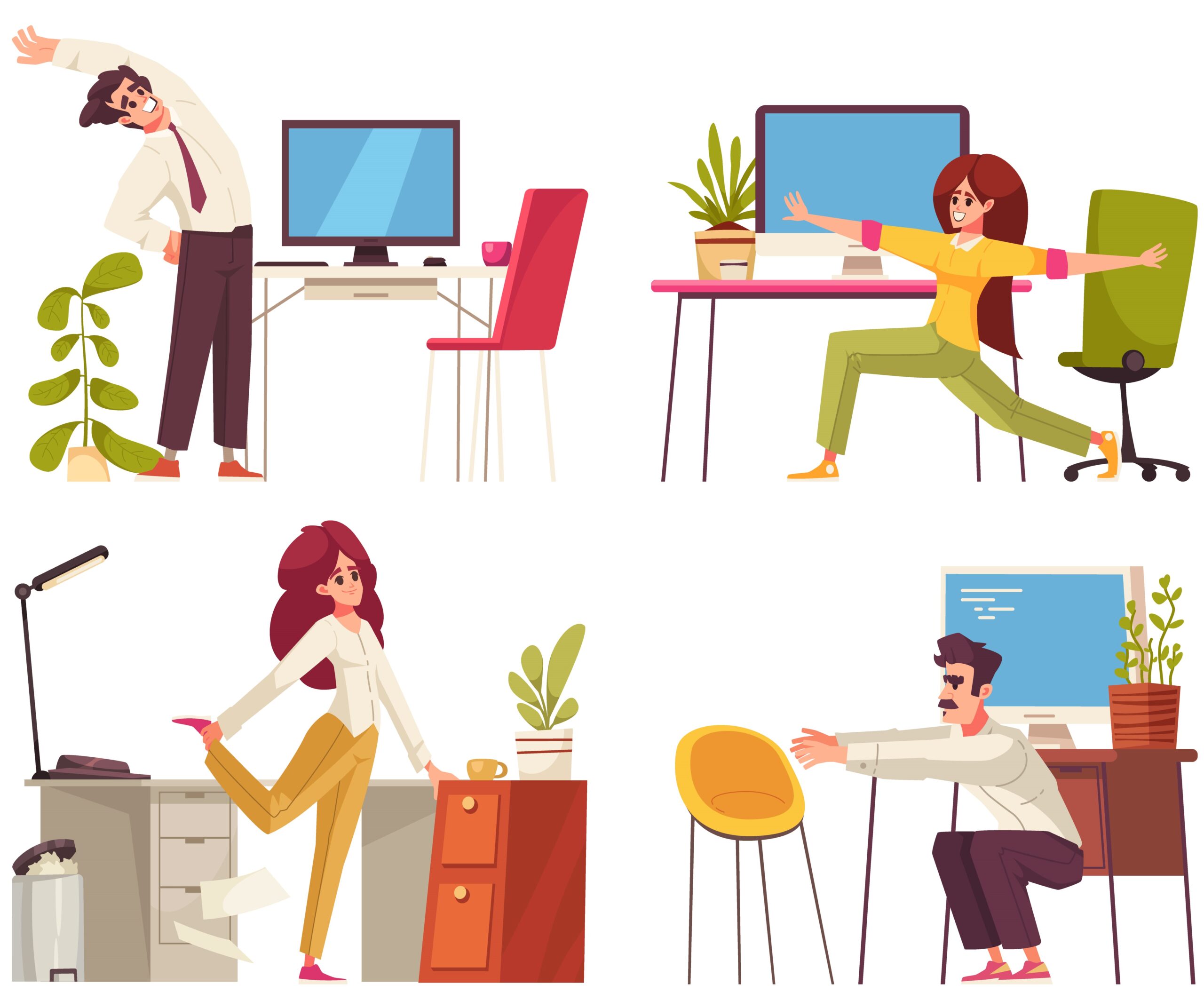
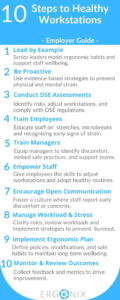
 Creating a healthy workstation is more than just a comfort measure. It is a critical factor in maintaining employee wellbeing, preventing physical and mental strain, and improving productivity. Ergonomic workplaces reduce the risk of musculoskeletal problems, eye strain, and mental fatigue. This guide outlines ten essential steps organisations can take to support staff health, aligned with the key messages in the accompanying infographic.
1.Lead by Example
Senior leaders play a vital role in shaping workplace culture. By demonstrating good ergonomic habits such as adjusting their workstation correctly, taking regular breaks, and carrying out stretches, they set a standard for staff to follow. When employees see leaders prioritising wellbeing, it encourages them to adopt similar habits and fosters a culture where health and safety are valued.
2. Be Proactive
Preventing strain and discomfort is easier than treating it later. Implement evidence-based strategies such as regular workstation assessments, structured stretching routines, and mental wellbeing initiatives.
Proactive approaches help reduce the likelihood of injuries and support employees before issues develop, creating a healthier and more productive work environment.
3. Conduct DSE Assessments
Regular Display Screen Equipment (DSE) workstation assessments help identify risks and ensure compliance with workplace health and safety regulations (HSE DSE). These assessments provide an opportunity to adjust workstations, recommend equipment changes, and educate staff on healthy workstation habits and injury prevention. Implementing DSE assessments reduces the risk of musculoskeletal issues, mental fatigue, and supports long-term employee health.
4. Train Employees
Education is key to sustaining healthy workplace habits. Staff should be trained on posture, stretches, microbreaks, eye-health and recognising early signs of discomfort or strain. When employees understand how to use their workstation safely, they are more likely to maintain ergonomic practices and prevent injuries over time.
5. Train Managers
Managers play a critical role in supporting ergonomic initiatives. By training managers to recognise early signs of discomfort and encourage safe work practices, organisations can ensure that employees receive support and healthy routines are consistently reinforced.
Well-informed managers can intervene promptly, preventing minor issues from developing into persistent health problems that affect staff wellbeing and workplace productivity.
6. Empower Staff
Employees should have the knowledge and authority to adjust their workstations and adopt healthy routines. Empowerment involves providing the right tools, guidance, and encouragement to make necessary changes. Staff who feel in control of their environment are more likely to engage in behaviours that support long-term health and wellbeing.
7. Encourage Open Communication
A workplace culture that promotes open communication allows staff to report early discomfort or concerns. Clear channels for feedback and regular check-ins help employees feel supported and valued. Early reporting enables timely interventions, preventing minor discomfort from escalating into significant strain, injury or resulting in sick leave.
8. Manage Workload and Stress
Balanced workloads and effective stress management are essential for employee wellbeing. Clarifying responsibilities and setting realistic workloads and deadlines helps prevent burnout. Addressing these factors protects both mental and physical health, while also supporting focus, engagement, and overall organisational productivity.
9. Implement an Ergonomic Plan
Organisations should define clear policies and procedures to maintain long-term health and wellbeing. An ergonomic plan can include workstation modifications, safe work habits, and ongoing staff education. A structured approach ensures consistent practices, reduces workplace risks, and provides a framework for continual improvement.
10. Monitor and Review Outcomes
Continuous evaluation is key to the success of ergonomic initiatives. Collecting employee feedback and tracking metrics such as injuries, sick leave, musculoskeletal complaints, stress levels, completion of DSE assessments, and employee engagement allows organisations to measure effectiveness. These metrics help adjust strategies as needed to prevent workplace strain and support employee health and productivity. Regular monitoring ensures that workplace health initiatives remain relevant, support both mental and physical wellbeing, and contribute to sustained productivity and organisational performance.
Conclusion
Healthy workstations are not just about comfort. They are an investment in employee health and wellbeing, engagement, and organisational performance. By following these ten steps, businesses can foster a culture that prioritises safety, prevents strain, and supports staff both physically and mentally. Combining training, leadership support, and ongoing monitoring ensures that healthy workplace habits are sustainable and embedded throughout the organisation.
Related articles:
Digital Eye Strain: What Employers Need to Know About Eye Health and Workstations
Why Exercise Balls Are Unsuitable as Office Chairs: An Ergonomic Perspective for Workplace Health